workshop
Collage workshops for developing cognitive skills and concentration
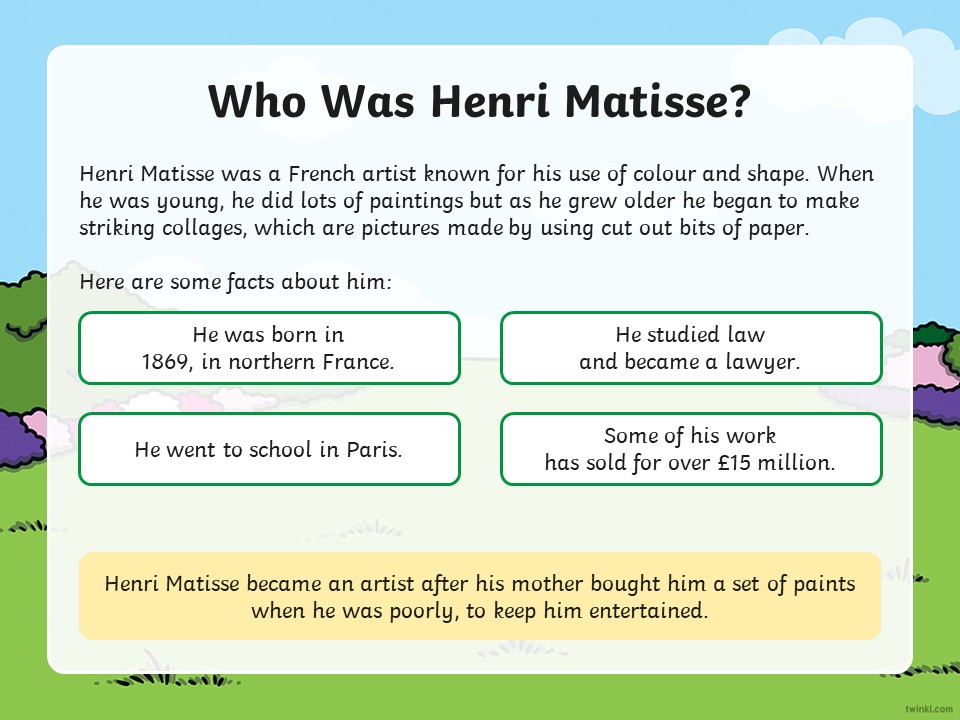
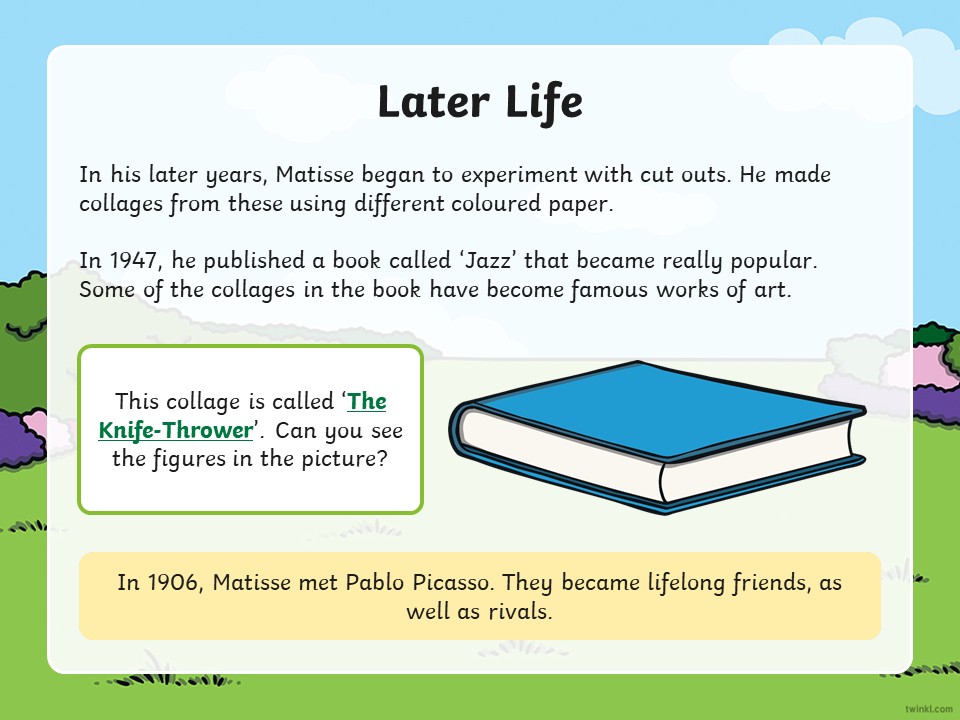
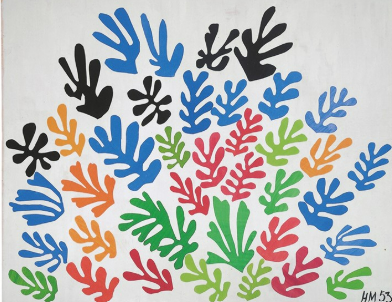
Henri Matisse's collage technique, known as "gouaches découpées" (cut-out gouache), was a revolutionary innovation in the artist's career, especially in the last years of his life. As his health deteriorated and it became increasingly difficult for him to paint, Matisse began to explore collage as a form of artistic expression. This technique consisted of cutting out shapes from paper that he first painted with gouache, a type of opaque, watercolour paint.
Key elements of Matisse's collage technique:
Use of Gouache:
Matisse would apply gouache by hand to the paper, creating sheets of vibrant, saturated colour. This was a different approach to the traditional use of commercially coloured paper.
Cutting Out Shapes:
After the painted paper had dried, Matisse would cut out various shapes, often organic or abstract. These shapes were then manipulated and arranged freely to create dynamic compositions.
Free Composition:
Matisse arranged these cut-out shapes on backgrounds of different colors to explore dynamic relationships of form, color, and space. The resulting compositions were vibrant and energetic, often rejecting traditional perspective or exact proportions.
Lack of Adherence to Convention:
Through this technique, Matisse placed less emphasis on realistic representation and more on abstract expressiveness. His collage works often transcended the traditional boundaries of the pictorial genre, offering a new freedom in the use of color and shape.
Interaction with Space:
Matisse's collages are not simply single-page images; they often interact with the surrounding space, extending onto walls or combining with the environment to create immersive installations.
This technique was not only a solution to Matisse's physical problems, but also an evolution of his artistic vision, allowing him to continue to innovate and experiment with form and color until the end of his life. His collage works are seen as some of the most influential and revolutionary works in modern art.