Global searching is not enabled.
Skip to main content

Topic outline

  • Workshop: Art-Therapy Garden – Creative Nature Experience

    Workshop: Art-Therapy Garden – Creative Nature Experience

    Target group: Seniors 55+
    Duration: 60–90 minutes
    Format:  online hybrid
    Difficulty: ★☆☆ (accessible for all)
    No login / Open-source resources


  • Learning Objectives

    Learning Objectives

    By the end of the workshop, participants will be able to:

    • Recognize how interaction with nature supports well-being and emotional balance

    • Apply basic art-therapy techniques using natural materials

    • Express personal emotions through visual creation and storytelling

    • Improve fine motor skills through tactile composition

    • Strengthen social bonds through collaborative creation

    • Materials Needed

    • Accessible, low-cost, no-risk materials:

      • Leaves, branches, pebbles, flowers, seeds, herbs

      • Recycled cardboard or watercolor paper

      • Glue sticks, string, scissors (safe/rounded)

      • Watercolors or colored pencils (optional)

      • Canva / Jamboard / Sketchbook (digital option)

       For indoor sessions: basket with mixed natural objects
       For remote/online: digital collage template + nature photo bank


    • Structure (Step-by-Step)

      Structure (Step-by-Step)


      https://gemini.google.com/share/59ff772270da 


      StageTimeDescriptionMethod
      Welcome & Emotional Check-in10 minSimple mood scale (1–5) & breathing exerciseMindfulness
      Nature Observation10–15 minShort walk in garden / looking through window / slideshowSensory grounding
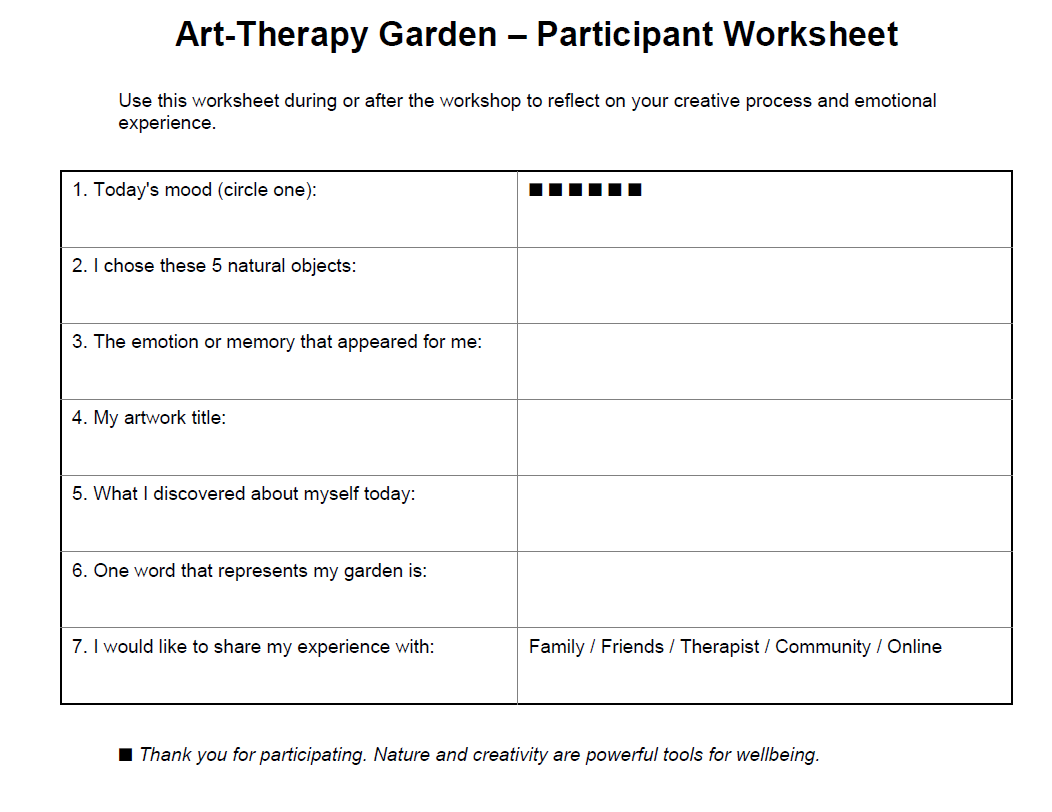
      Collection of Inspiration10 minParticipants choose 5 natural items that “call to them”Free exploration
      Creative Task: Nature Collage “My Inner Garden”25–35 minCreating an artwork from natural materials on cardstockArt-therapy
      Reflection & Sharing10–15 minVoluntary storytelling: “What does your garden say about you today?”Narrative therapy
      Closing Ritual5 minShort guided affirmation + gratitude for natureMindful closure

      Creative Task Instructions (for participants)

      Step 1: Look at the items you selected.
      Step 2: Choose one emotion or memory that appears for you.
      Step 3: Create your “Inner Garden” to show how you feel now.
      Step 4: Use glue/string to attach elements; add color if you want.
      Step 5: Give your artwork a title.

      Examples:

      • The Garden of Peace

      • My Roots and My Wings

      • A Path to Myself

      • Seeds of Hope


      • Psychological Benefits

        Psychological Benefits 

        • Stimulates neuroplasticity and sensory integration

        • Supports emotional regulation through tactile activity

        • Encourages reminiscence and autobiographical memory

        • Reduces anxiety and inner tension

        • Creates a safe space for identity affirmation


        • Evidence . Platform Tasks

          Evidence . Platform Tasks

          Assignments:

          • Upload a picture of your artwork (or describe it in 5 sentences)
          • Short reflection: “What emotion did the garden help you explore?”
          • Optional voice message for accessibility

          Assessment:

          • Participation only (no grading)
          • Badges earned:
             Nature Explorer – first upload
            Creative Soul – completed reflection


          Digital Alternatives

          For seniors with mobility limitations:

          Tool

          Activity

          Canva (free)

          Drag-and-drop digital collage with nature elements

          Google Jamboard

          Collaborative garden board in group

          Autodesk Sketchbook

          Digital drawing of an imagined therapeutic garden

          Quiver AR

          Mandala + plants augmented reality coloring

          VR: Nature Treks (if available)

          Guided 10-min immersion, calming environments


          Facilitator Notes

          • Avoid judging artistic skill – focus on expression
          • Monitor seniors with anxiety; offer grounding techniques
          • Provide verbal and physical accessibility support
          • Allow extra time for those with low mobility or Parkinson traits
          • Encourage storytelling, not perfectionism